Melanoma Biology: Translating Science into Clinical Practice
Understanding the biology of melanoma is fundamental to providing safe, effective, and person-centred care.
Through 5 interactive self-paced modules, this course demystifies complex concepts and empowers learners to translate scientific knowledge into meaningful clinical conversations, patient education, and collaborative care planning:
- Module 1: Foundations of Melanoma
- Module 2: Staging, Diagnostics and Tumour Progression
- Module 3: Treatments and Their Mechanism of Action
- Module 4: Treatment Selection in Clinical Practice
- Module 5: Advanced Disease, Resistance and Toxicity
This course has been designed to equip healthcare professionals with the knowledge of how melanoma develops, progresses, and impacts treatment pathways, to enhance confidence in clinical communication and decision-making.
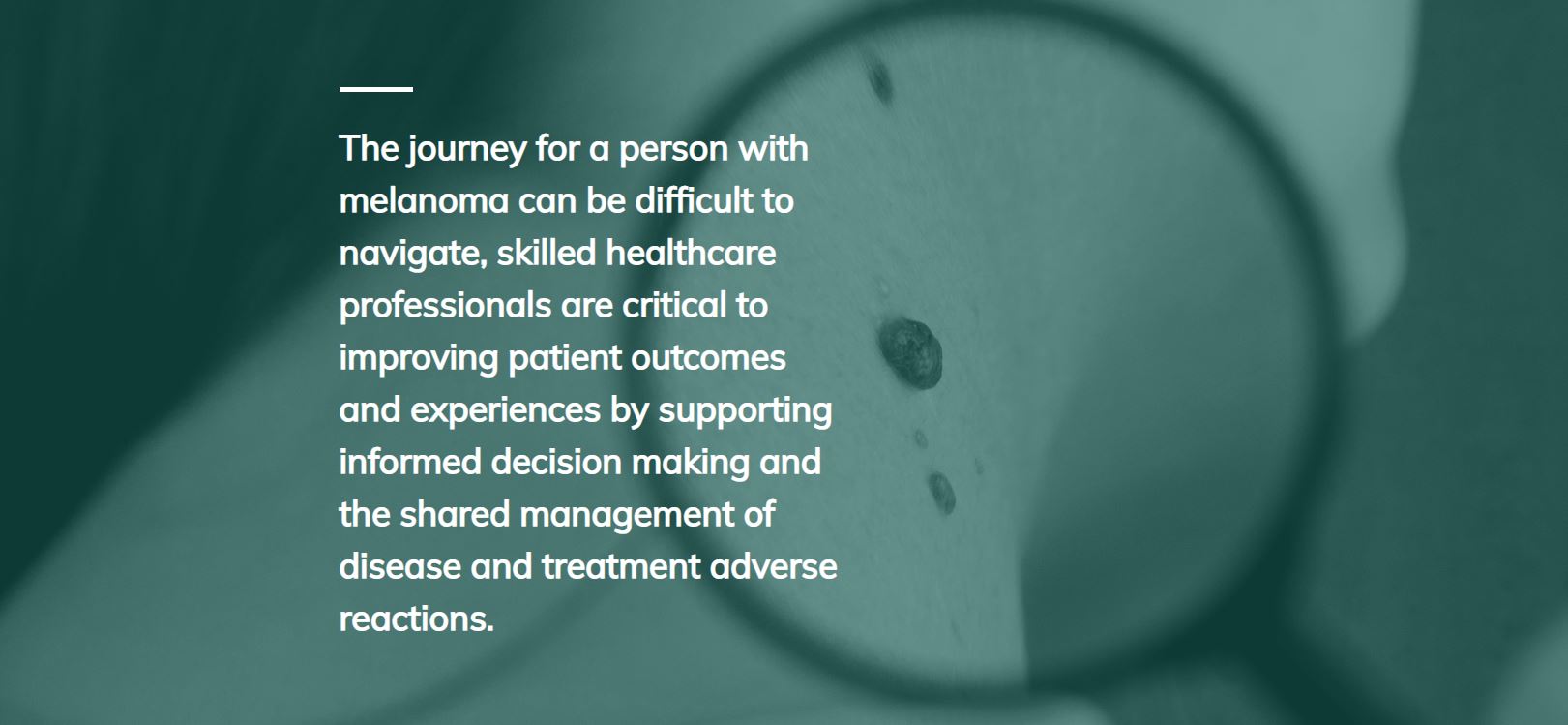
The following video highlights the benefits of developing in-depth knowledge for healthcare professionals, and importantly, the patients in their care.
During this course, you will have the opportunity to explore:
- The key molecular and cellular mechanisms that underlie the development and progression of melanoma, including genetic mutations (e.g. BRAF), tumour microenvironment, and metastatic pathways.
- The clinical relevance of melanoma-specific pathological features, such as mitotic rate, mutational burden, and staging, and how these factors influence treatment planning and prognosis.
- How prognostic tools and risk stratification models are used to assess the likelihood of melanoma progression, and support clinical decision-making regarding surveillance and care planning.
- How evolving staging systems and emerging therapies influence the management of melanoma, with a focus on knowing the rationale behind treatment pathways rather than specific regimens.
- How in-depth knowledge of melanoma pathophysiology enhances clinical practice and multidisciplinary care, particularly in supporting early detection, patient education, and interdisciplinary communication around care decisions.
Funding acknowledgement
This work received funding from the Australian Government through the National Melanoma Nurses Program Grant ID: GO6122
Who will I learn from?
This course was developed by Melanoma Institute Australia and VCCC Alliance.
Testing
Resource details

This course is brought to you by